


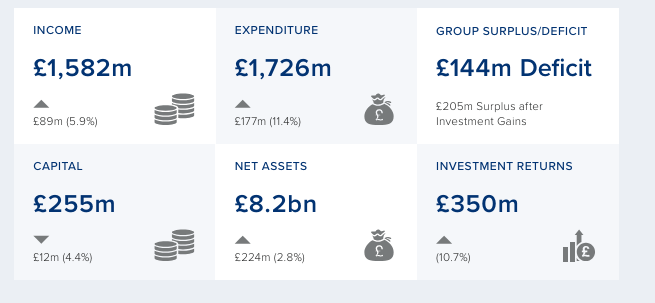
The States of Jersey spent more than £1.72 billion pounds last year.
The annual accounts for 2023 show expenditure rose by £177 million, an increase of 11.4% on the previous year.
Much of the additional spending is put down to inflation and extra investment in services, such as health, as well as responding to major incidents.
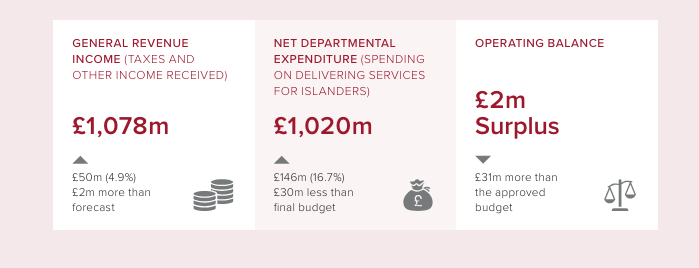
However, income was up too, with an extra £89m thanks to a higher tax-take. Still, that 6% growth was below inflation.
Overall, outgoings outstripped income by £144m.
Investments made money, with returns of £350 million, a 10% rise on the 2022 value. That has helped to boost the government's saving pots with increases to the Strategic Reserve, or so-called Rainy Day Fund (to £1.1 billion) and Social Security Reserve (to £2.1 billion).
Treasury Minister Elaine Millar says public finances are still affected by the impact of the Covid pandemic, but the plan for the coming years emphasises tax funded day-to-day expenditure, allowing investment returns to be reinvested to boost reserves and invest in infrastructure.
"The 2023 Accounts show the strong position we find ourselves in relative to other jurisdictions. Our finances are moving back into balance following the impacts of COVID and the continued cost-of-living crises.
"This strength, combined with prudent stewardship and an ongoing regard for long-term financial sustainability and stability, will be key to retaining and attracting businesses to the Island as well as safeguarding the wellbeing of Islanders into our future."
 Invite to 'Sponsor a Brave Bear' for families facing off-island treatment
 Travel problems persist for some Jersey residents
 The solar eclipse in Jersey: All you need to know
 £1.2m in fines for missed Income Tax deadline
 One in eight Jersey heatwaves has happened this year
 Hydration breaks to be introduced at Battle of Flowers
 Nurturing biodiversity key to climate resilience
 Record amount raised in 2026 Jersey-France challenge