

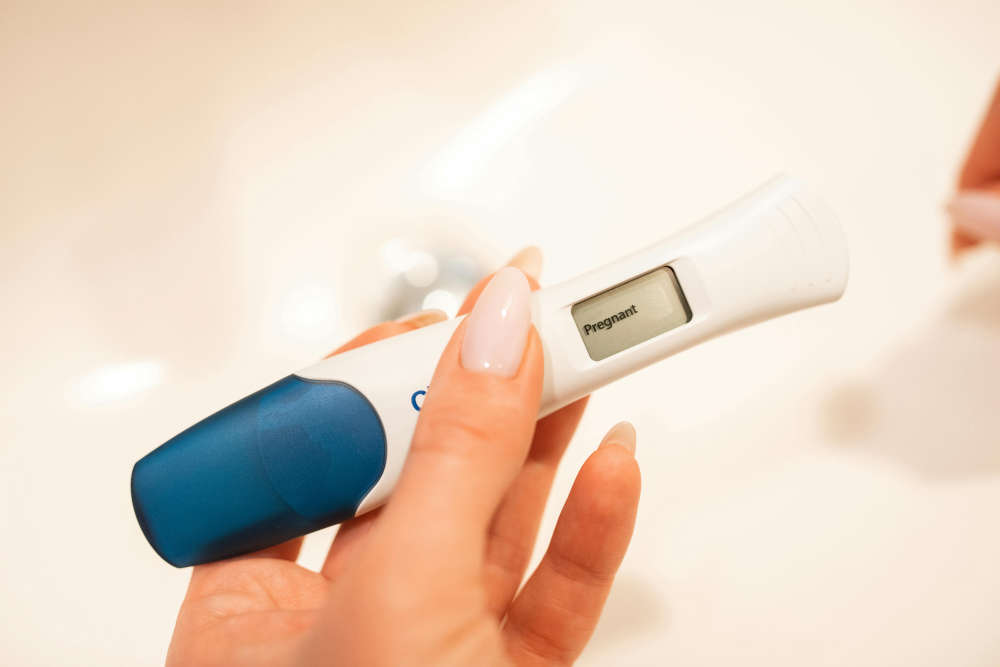
Jersey has overhauled its almost 30-year-old abortion law to update thresholds, which makes terminations past 22 weeks legal, although it is unlikely that late stage abortions will be carried out here.
Around 300 islanders travelled to the UK for an abortion, before the 1997 Abortion Law was introduced, to avoid prosecution.
Between five and 25 women still do this each year, as the cut-off point for terminations here has remained at 12 weeks, despite the UK increasing it to 24 weeks.
An abortion up to 24 weeks in Jersey was only permitted under very rare circumstances, such as a risk of serious foetal anomalies.
Now, politicians have voted 44 in favour and two against adopting a new Termination of Pregnancy Law, which permits women to end their pregnancies both before 22 weeks and after 22 weeks.
Whether healthcare professionals choose to deliver late-stage terminations in Jersey is their choice, so women may still need to go to the UK for an abortion in some circumstances.
Before 22 weeks of gestation, women will no longer need to give a reason for terminating a pregnancy and will only have to consult one doctor.
Women will not have to justify their decision as to why they cannot continue their pregnancies, citing distress or having a medical reason, physical or mental.
Women will still have to attend a face-to-face appointment by self-referring to the termination centre.
Pregnancies may also be terminated after 22 weeks on defined medical grounds, such as risk to life or due to serious mental or physical harm.
Specialists may be able to carry out the procedures in Jersey, although it is 'unlikely' due to relevant training, skills and experiences or consent to carrying out the procedure.
Jersey would suggest the following criteria are met:
-
Necessary to save a life,
-
Prevents serious risk to another foetus,
-
Prevents risk to physical and mental health,
-
If the foetus has a serious anomaly, which includes definitions, and whether doctors are satisfied that the threshold is met.

The new law sets out that people, of any age, from anywhere, can have an abortion in Jersey, for a fee, unless they are under the age of 18 or a student.
However, the medication must be taken in the island.
The residency change was made to acknowledge women coming to Jersey to work for short periods of time.
The new law also gives future Health Ministers and States Assemblies the powers to amend the law where necessary to keep it up to date.
This could range from allowing nurses, with training, to deliver termination services in Jersey, updating time limits due to technological advances, or allowing over-the-phone consultations with doctors in the event of another pandemic.

When it comes to prosecution and offences, women have been assured that they will 'never' be held legally responsible for ending a pregnancy in any manner.
The Health Department concludes that a woman who ends their pregnancy illegally must be in a vulnerable position.
On the other hand, if the pregnancy is ended by a doctor who knowingly carries out a procedure that goes against the law, they will be charged with an offence.
If a third party, such as a partner, ends a pregnancy without consent, i.e. causing a miscarriage through violence, they could face life imprisonment.
If a woman has asked someone for help to terminate their pregnancy outside of a medical setting, the third party could receive a fine or up to 14 years in prison, depending on the severity.
 Wettest ever February in Jersey
 Only women in their late twenties earn more than male peers in Jersey
 Law updates target explicit AI deepfakes, stalking and strangulation
 26-year-old Pier Road mural to be replaced
 Family of Guinea pigs with JSPCA after Devil's Hole rescue
 CI trade body warns of building delays after SGB shuts
 Food venues required to comply with new food safety standards
 Oh yes it is, Jersey's first professional pantomime!


Comments
Add a comment