
The UK Ministry of Defence say the fuses on 2,000lb weapons are not armed and the bombs are 'highly unlikely' to self detonate.
The decision to leave the Allied weapons undisturbed under around 24 feet of earth is based on expert analysis by the Ministry of Defence (MoD).
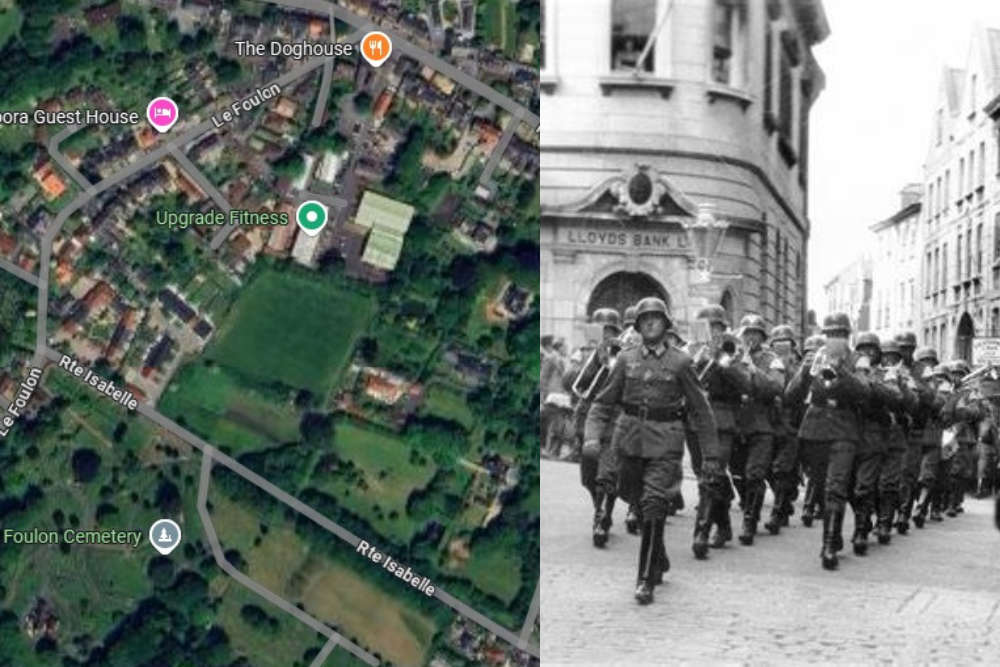
A survey last year showed that three, and not four 2,000lb armour piercing bombs lie close to a housing development.
Further analysis suggests the risk of self detonation is 'highly unlikely' and the resulting explosion would cause only minor structural or cosmetic damage.
Historical evidence shows that the weapons were dropped by an RAF Stirling bomber returning from an aborted raid on a German ship.
Given this, experts say the weapons were unlikely to be armed and being dropped at a low height means they did not arm themselves.
Also, the fuses are not considered 'brittle' and the fact the weapons did not explode on impact points to this.
The detailed analysis also shows one of the bombs suffered damage as it landed.
Deputy Marc Leadbeater who heads the Home Affairs Committee, says leaving the bombs alone is the best option:
“We want to reassure the community that this decision has been taken following careful consideration and has been guided by extensive expert evidence and a clear understanding of the very low level of risk involved.
"The expert analysis shows these devices are highly unlikely to be armed and leaving them undisturbed at depth is the option that presents the least risk to the community.
"Our priority throughout has been public safety and this decision reflects the best technical advice available which shows disturbing them would create far greater risk.”
The Channel Islands Emergency Planning Officer Kevin Murphy says they have listened to the experts:
“Our planning has been guided at every stage by specialist advice from the Ministry of Defence, the British Army and a NATO specialist asset.
"The assessments show that the ordnance poses no threat to life and only a very small chance of any structural damage if they do detonate, and the chances of that happening are extremely small.
"By keeping the bombs safely buried, we avoid the significant disruption and unnecessary increased risk that excavation would create.
"I’d also like to reassure the community that this decision is not the complete end of the matter.
"We will continue to monitor the situation and if any changes occur, reassess the best way to achieve public safety.”
Ben Remfrey, a Guernsey mines and weapons expert who campaigned for the detailed analysis of the site, says he feels vindicated by the findings and the decision to leave the weapons undisturbed is out of his hands.
He does, however, have an issue with the decision to build a Clos next to the field containing the bombs.
"Prior to my research, I was told that these bombs didn't exist, and then suddenly we're being told that the bombs do exist, but they're not a threat to the general public.
"If there's even a very small percentage chance that something might happen, then there's a percentage chance it will happen.
"To decide to leave all of the devices in situ for there to be no further action taken is an unacceptable risk in my view.
"I would be concerned because, you know, in the first instance, that clos should never have been built.
"They knew the bombs were there since the 3rd of March, 1941."
 Winter Fuel Allowance ready to roll in Guernsey
 Guernsey "largely unscathed" by Storm Austen
 Commodore Clipper breaks mooring ropes in Storm Austen
 70 mph winds batter Guernsey
 Haut Du Mont: Jury fails to reach verdict on third gas worker
 Schools in Guernsey to close for Storm Austen
 States of Guernsey 'carefully monitoring' forecasts for Storm Austen
 Haut du Mont: Gas workers convicted of manslaughter


Comments
Add a comment